
Raksha: Protecting the Ship of the Desert
Protecting the Indian Camel from slaughter and being smuggled across the border. Their Rescue and Rehabilitation.
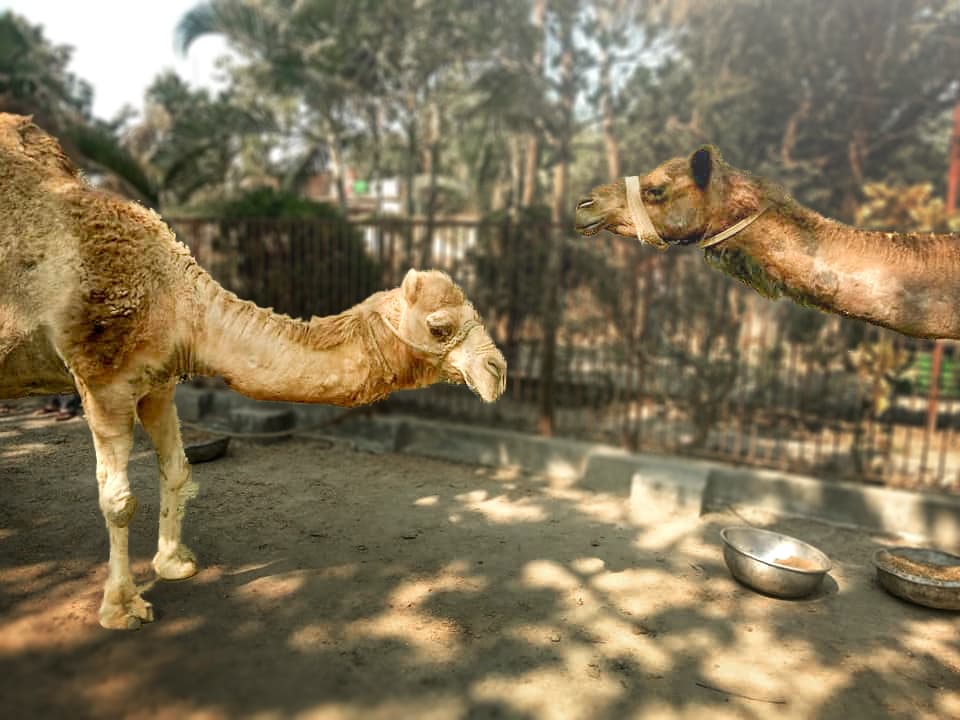
Brief Introduction:
Every year hundreds of camels are transported illegally across state boarders for slaughter, either on foot or in crammed vehicles. These camels are gruesomely slaughtered in contravention to the rules and several sections of the law. Illegal entry and slaughter of camels are a violation of Section 429 of IPC and other laws. It mounts to cruelty towards animals as defined under section 11 of PCA Act. It is a cognizable offence under section 428 and 429 of IPC. Despite several provisions in law banning camel slaughter, the same continues unabated with occasional outcry in the media due to efforts of NGOs like ours. “Raksha” is CAPE Foundation’s Camel Protection program.
CAPE Foundation, along with Dhyan Foundation, have been working relentlessly for the rescue, rehabilitation and prevention of slaughter of Indian camels in West Bengal.
Every year, hundreds of camels are slaughtered or smuggled through the border into Bangladesh. The data is alarming. While there were an estimated 12 lakh camels in the country in 1997, the numbers dwindled to less than 2.5 lakh by 2019. Rajasthan accounts for 82% of camel population in the country.
These camels are transported illegally across state borders for slaughter, either on foot or in crammed vehicles. They are smuggled through kaccha village roads to remote parts of various districts making it impossible to track. Organizations like ours depend on tip offs from locals on the camels' whereabouts.
Then comes the lengthy and tedious process of getting to these remote areas and convincing most reluctant police officers and the local administration to act. Very often we are faced with a situation, where the police and local administration allow a large number of camels to escape to keep a political balance and leave us to rescue the remaining few. The Police are also reluctant to file FIRs or arrest the culprits. The local authorities do not want to take responsibility of the camels if confiscated leaving us to do the needful.
We are then faced with lengthy legal battles at the sessions and district courts of the area. These lengthy court battle endanger the lives of the camels. The unsuitable climatic conditions of West Bengal, the lack of natural habitat and food they are used to as well as no proper veterinary support are detrimental to their wellbeing. We lose a number of camels during this long waiting period..
Since these camels are transported in terrible conditions and take close to 15 to 20 days to reach west Bengal if brought by foot. If transported in vehicles they are cramped practically on top of each other to make maximum usage of space. They are dehydrated, malnourished and injured by the time they are off loaded.
Once we get custody of the camels comes the tedious and lengthy process of transporting them back to Rajasthan in the care of our partner organizations. This itself costs close to a few lakhs as we need to hire adequate trucks filled with sand and straw for their comfort while traveling the long distance back home.