
The Incredible Journey of Champa: From Circus Captivity to Freedom
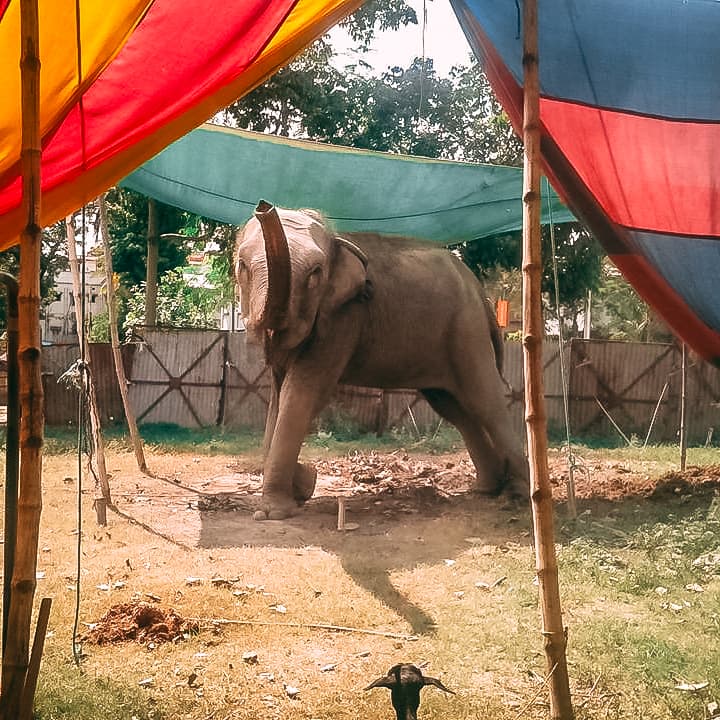
In May 2015, Champa, a circus elephant in her late 50s, was leading a life of captivity and misery. Shackled in a corner, she was forced to perform tricks, play cricket, and subsist on a meager diet of a loaf of bread. Her story of rescue could rival a bestselling thriller set in Calcutta. This blog will take you through the remarkable journey of Champa, from her bleak existence in captivity to her newfound freedom and happiness.
The Discovery:
Dr. Chandan Ray, a renowned pediatrician from Calcutta and a patron of the CAPE Foundation, stumbled upon the Sonali Circus, which had set up its tent near his residence. He was unaware of this particular circus and the cruel treatment being meted out to Champa. Recognizing the urgency of the situation, he reported Champa's plight to CAPE.
An Unregistered Circus:
Upon further investigation, it was discovered that Sonali Circus was not a registered circus at all. Yet, they had an elephant in their possession and were making her perform right under the nose of the West Bengal Forest Department. This raised questions about their legality and the well-being of Champa.
A Violation of Guidelines:
CAPE conducted a three-day undercover investigation to observe Champa's living conditions and the duration of her performances. It became evident that the circus was in violation of the Guidelines for Elephant Care in Project Elephant, which were established under the 1972 Wildlife Protection Act. Champa appeared to be a victim of trafficking and exploitation.
Legal Action:
With ample evidence of the circus's transgressions, CAPE Foundation filed a complaint with the Biddhanagar (East) police station. It wasn't an easy task, as the police officers were initially ignorant of the Wildlife Protection Act and related guidelines. However, with persistence, they took the necessary steps to rescue Champa and arrested the culprits.
A New Beginning:
After a month-long court battle, the Biddhanagar District Court awarded permanent custody of Champa to the West Bengal Forest Department. During the legal proceedings, Champa found temporary shelter at the West Bengal Forest Department's Salt Lake Rescue Centre. For the first time in her life, she experienced a spacious and green environment, with soft ground underfoot.
Rehabilitation:
Champa's days at the rescue center were filled with scrumptious meals, including green grass, banana bark, jackfruit leaves, and watermelons. Her rehabilitation was marked by heartwarming moments as she enjoyed her newfound freedom.
Reuniting with CAPE:
Champa began to recognize the CAPE Foundation members who visited her, eagerly awaiting their treats and displaying her gratitude with ear-flapping and trunk-swaying.
A New Life in Gorumara Forest:
Today, Champa has a family and resides in the Gorumara Forest reserve as a patrolling elephant. She lives alongside other elephants, grazing and moving together. However, the scars of her traumatic past still haunt her, as she struggles with Post Traumatic Stress Disorder and finds it challenging to fully embrace her newfound freedom. Unlike elephants who grew up in the wild, Champa tends to stay within a limited radius.
Conclusion:
Champa's journey is a testament to the resilience of animals and the importance of organizations like the CAPE Foundation in fighting for their rights. While her frail structure may bear witness to her past suffering, she now lives a life of relative peace and freedom. Champa's story is a reminder that every elephant deserves to roam free and unburdened by the chains of captivity.